

What’s in a Name? The Lord’s Prayer: Hallowed be Thy Name
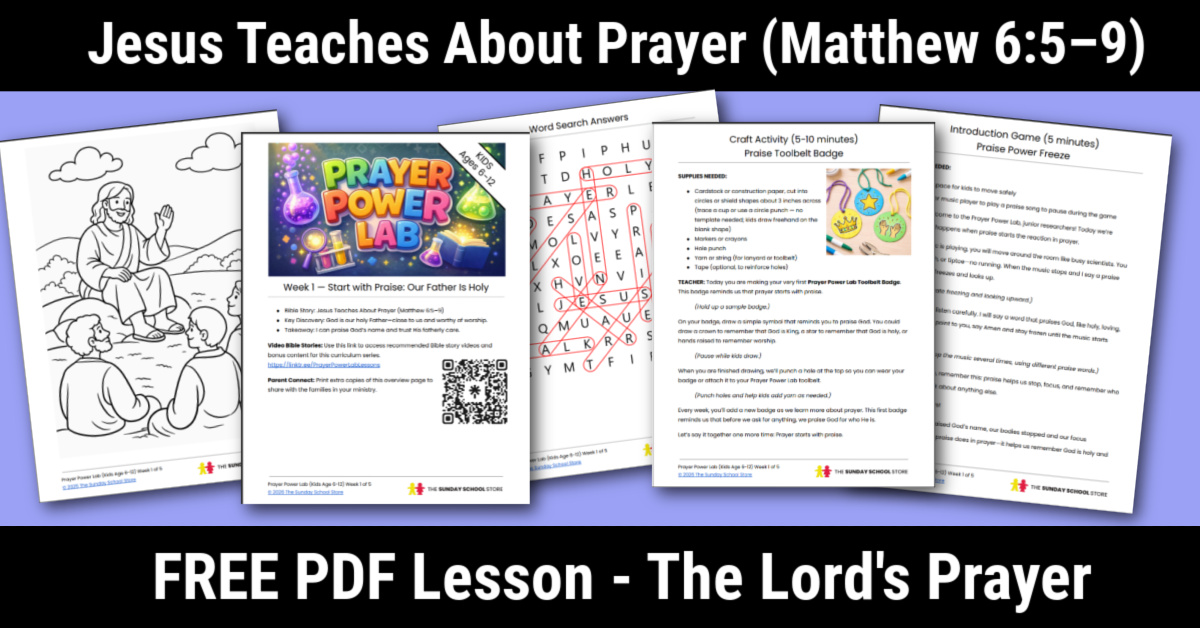
See the Bible Crafts on God’s Name is Holy.

Main Objective: Names are essential to all of us. Kids can understand that names mean something and that having a name misused, misspelled, or mispronounced is frustrating. This message taps into those feelings to communicate how important it is to use God’s name appropriately and reverently. Discuss the Lord’s Prayer and the Commandment about the Lord’s name to emphasize how special God is, and how we can use His name correctly.
Law/Gospel Theme: The Bible gives us several names for God. One key name we read is Yeshua, which means “The Lord Saves.” Of course, we know this better as Jesus, God incarnate, who saves us from sin. When we consider the commandment not to take the Lord’s name in vain, we also remember the positives of what we should do with the Lord’s name: call upon it for help and praise it, knowing how powerful and holy God’s name is.
Free: complete Sunday school lessons to try
Ready-to-print lessons from our 2027 series: four for kids ages 6–12, six for preschool ages 3–5. Read it through once and teach this Sunday. Free checkout, the download comes by email.
Teaching preschool? Get the 6 free preschool lessons.
Note: This lesson is the second in a series on the Lord’s Prayer. Each lesson will consider another part of the Lord’s Prayer, examining what it means and how we can use it in personal prayer. Each lesson will also include a story from the Bible that illustrates the point.
Optional Materials: Name tags (from a job or restaurant, or generic sticker name tags).
Bible Passage: Matthew 6:7-9; Exodus 3:1-17
Message: Note: As with most messages, the details of how you choose to communicate this one are adaptable and should cater to timing as well as to your audience and student needs.
Greet children, and discuss names…
Hello, children of God!
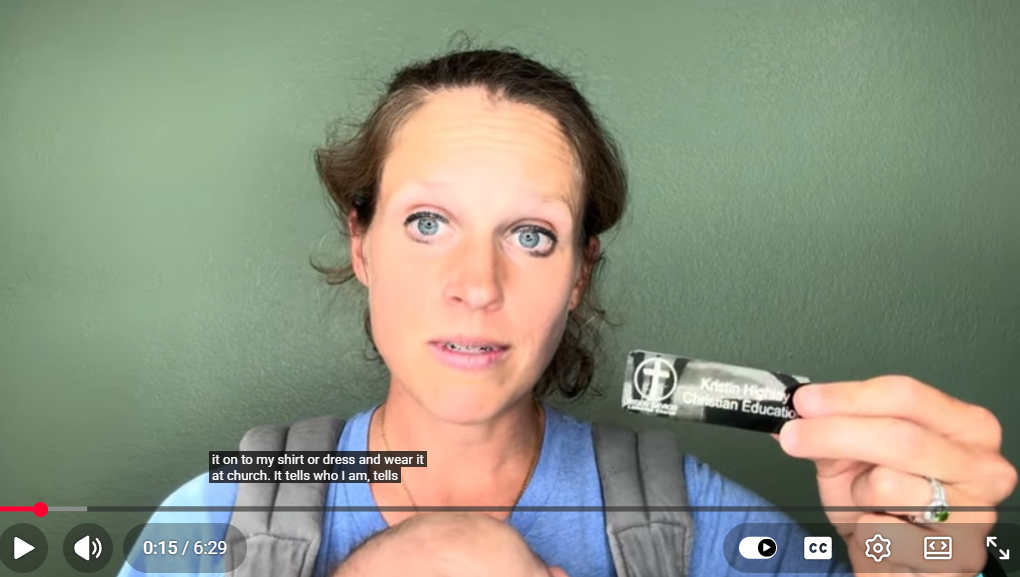
What do I have here? Hold up a name tag of some sort. Yes, this is a name tag. Someone at a store or restaurant usually wears one of these to show that they work there and can offer help if needed. A lot of times people in churches wear name tags. Maybe you’ve worn a name tag before at a special event or activity of some sort. They tell people who you are and how to call you.
Names are important, and they are significant. Not only do they give people a way to address us, but every name means something. Do you know what your name means? Share what your own name means, and mention what some of the students’ names mean, if you know. Have you ever had someone say your name wrong, or call you the wrong name? Or maybe you’ve even heard someone make fun of your name. It can be frustrating and hurtful when people do that, right?
Well, God also has an important name, and we want to make sure that we honor it and use it correctly. Actually, the Bible gives us several names for God, but all of them are special. One name we see God give us in Scripture is “Yahweh.” This is the name that He told Moses when He called to him from the burning bush. God told Moses that he was going to lead the people out of slavery in Egypt. Moses asked the Lord who He was, and what name he should give the people. God told Moses that He was “I am,” and “I am” sent him. Yahweh means “I am.” In giving Moses his name, God was sharing something valuable and precious, and describing the essence of who He was.
God wants us to honor Him by recognizing how holy His name is. In the Lord’s Prayer, we start by saying “hallowed is your name.” The word “hallowed” means holy, or set apart for a special purpose. When we declare that God’s name is holy, it means we respect it and understand that it’s part of God. In the Ten Commandments, we are directed not to take the Lord’s name in vain. That means we want to use God’s name for the right purpose. We don’t use it as a curse, or a casual exclamation. We don’t ignore its significance and power. We don’t love it when people misuse or mistreat our names, and the Lord’s name is so much more meaningful and wonderful!
So how can we keep His name holy? We use God’s name in prayer, when we call upon Him for help. We can also honor it in worship, when we sing praises to Him or honor who he is and how wonderful He is. God is mighty, powerful, and Holy, and His name is great and to be praised. We revere and respect His name, and by doing that, we show love and care for Him. Hallowed be His name!
Let’s pray now and ask God to help us honor and respect His holy name.
Prayer:
(Have kids repeat each line)
Dear God,
Thank you for giving us your wonderful name.
Please help us to remember that it is special and holy.
Help us honor your name and you,
And call upon you when we need help.
We praise your name!
Thank you for your love.
We love you, God!
In Jesus name, Amen!
Bible Verses/story to Reference:
Now Moses was keeping the flock of his father-in-law, Jethro, the priest of Midian, and he led his flock to the west side of the wilderness and came to Horeb, the mountain of God. And the angel of the Lord appeared to him in a flame of fire out of the midst of a bush. He looked, and behold, the bush was burning, yet it was not consumed. And Moses said, “I will turn aside to see this great sight, why the bush is not burned.” When the Lord saw that he turned aside to see, God called to him out of the bush, “Moses, Moses!” And he said, “Here I am.” Then he said, “Do not come near; take your sandals off your feet, for the place on which you are standing is holy ground.” And he said, “I am the God of your father, the God of Abraham, the God of Isaac, and the God of Jacob.” And Moses hid his face, for he was afraid to look at God.
Then the Lord said, “I have surely seen the affliction of my people who are in Egypt and have heard their cry because of their taskmasters. I know their sufferings, and I have come down to deliver them out of the hand of the Egyptians and to bring them up out of that land to a good and broad land, a land flowing with milk and honey, to the place of the Canaanites, the Hittites, the Amorites, the Perizzites, the Hivites, and the Jebusites. And now, behold, the cry of the people of Israel has come to me, and I have also seen the oppression with which the Egyptians oppress them. Come, I will send you to Pharaoh that you may bring my people, the children of Israel, out of Egypt.” But Moses said to God, “Who am I that I should go to Pharaoh and bring the children of Israel out of Egypt?” He said, “But I will be with you, and this shall be the sign for you, that I have sent you: when you have brought the people out of Egypt, you shall serve God on this mountain.”
Then Moses said to God, “If I come to the people of Israel and say to them, ‘The God of your fathers has sent me to you,’ and they ask me, ‘What is his name?’ what shall I say to them?”4 God said to Moses, “I am who I am.” And he said, “Say this to the people of Israel: ‘I am has sent me to you.’” God also said to Moses, “Say this to the people of Israel: ‘The Lord, the God of your fathers, the God of Abraham, the God of Isaac, and the God of Jacob, has sent me to you.’ This is my name forever, and thus I am to be remembered throughout all generations. Go and gather the elders of Israel together and say to them, ‘The Lord, the God of your fathers, the God of Abraham, of Isaac, and of Jacob, has appeared to me, saying, “I have observed you and what has been done to you in Egypt, and I promise that I will bring you up out of the affliction of Egypt to the land of the Canaanites, the Hittites, the Amorites, the Perizzites, the Hivites, and the Jebusites, a land flowing with milk and honey.”’
-Exodus 3:1-17
Hallowed be Thy Name – Sunday School Lesson on The Lord’s Prayer: Part Two
The name of the Lord is mighty and powerful, and we can go to Him with prayers and praises. We want to honor God’s name and keep it holy, recognizing that it is a special part of who He is and respecting it means we respect Him. This lesson considers God’s name and how we can revere it.
This lesson is the second in a series on The Lord’s Prayer, examining the prayer line by line to understand what it means for us and how it helps us have a blueprint for prayer. This lesson focuses on God’s name, considering how the Lord gave His name to Moses in Exodus, and how He gives us His name with hallowed purpose.
Passage: Matthew 6:7-9; Exodus 3:1-17
Target Audience: Kindergarten-6th grade
Materials Needed: Pictures; post-it notes; construction paper; markers; Bibles.
Lesson Opening: This lesson focuses on God’s name as holy and powerful. We recognize the importance of names, and want to treat the Lord’s as extra important. Open with some name activities or something connected to Moses and the burning bush.
- Name Game Memory: Have students sit in a circle. Choose a theme, like items needed for a picnic or a place to visit. One at a time, have students state their names and something that starts with the letter of their first name (“I’m Hannah and I will bring ham sandwiches to the picnic;” “I’m Samuel and I will visit South America”…). Have the following students recite the names and items of students before them before adding their own.
- “Who Am I?” Put a sticky note on each student’s back, with the name of another student or a famous person. Have kids try to figure out their names by asking other children questions about the person (“am I a girl? Am I famous?” etc.)
- Acrostic poem: Have children consider special things about their classmates by creating an acrostic. Give each child someone else’s name, and invite them to come up with words or phrases describing the person, using the letters of their name. Then have students present their poems to the student who matches them.
- Discuss some of the various names of God (Elohim, Adonai, etc.) and what they mean. The Bible gives us multiple names for God, and all of them are valuable to pray and praise Him.
Explain that this lesson is focused on a special prayer that Jesus taught His disciples (and us!). In the Bible, we are given a sort of prayer blueprint. We don’t have to say the exact words of the Lord’s Prayer every single time we talk to God, but it helps us get an idea of how we can pray. The Lord’s Prayer begins by telling God “hallowed be your name.” That means God’s name is very special, and we should honor and respect it. We are going to learn about someone who heard from God Himself what His name was.
Ask: Do you know what your name means? How do you feel when someone messes up your name?
Bible Lesson: This story is an episode from the life of Moses, and offers his encounter with God and the name God gives. Read or paraphrase Exodus 3 with students, emphasizing the element of God’s name.
Now Moses was keeping the flock of his father-in-law, Jethro, the priest of Midian, and he led his flock to the west side of the wilderness and came to Horeb, the mountain of God. And the angel of the Lord appeared to him in a flame of fire out of the midst of a bush. He looked, and behold, the bush was burning, yet it was not consumed. And Moses said, “I will turn aside to see this great sight, why the bush is not burned.” When the Lord saw that he turned aside to see, God called to him out of the bush, “Moses, Moses!” And he said, “Here I am.” Then he said, “Do not come near; take your sandals off your feet, for the place on which you are standing is holy ground.” And he said, “I am the God of your father, the God of Abraham, the God of Isaac, and the God of Jacob.” And Moses hid his face, for he was afraid to look at God. -Exodus 3:1-6
This passage finds Moses in the wilderness. Moses spent a lot of time in the wilderness, actually, but this time was because he had run away from Egypt after doing something very bad. As he was taking care of sheep, he saw a bush that was burning. A voice called to him out of the bush, announcing it was God!
Ask: What do you think you would do if you saw something like this? Would you run toward the bush or away from it?
Then the Lord said, “I have surely seen the affliction of my people who are in Egypt and have heard their cry because of their taskmasters. I know their sufferings, and I have come down to deliver them out of the hand of the Egyptians and to bring them up out of that land to a good and broad land, a land flowing with milk and honey, to the place of the Canaanites, the Hittites, the Amorites, the Perizzites, the Hivites, and the Jebusites. And now, behold, the cry of the people of Israel has come to me, and I have also seen the oppression with which the Egyptians oppress them. Come, I will send you to Pharaoh that you may bring my people, the children of Israel, out of Egypt.” But Moses said to God, “Who am I that I should go to Pharaoh and bring the children of Israel out of Egypt?” He said, “But I will be with you, and this shall be the sign for you, that I have sent you: when you have brought the people out of Egypt, you shall serve God on this mountain.” -Exodus 3:7-12
God had a very important job for Moses to do. The people of God had been in slavery in Egypt for many years. The Egyptians were hurting and oppressing them, and it was time to get out. God told Moses that he would be His instrument to get the people out of the hands of Egypt. Moses questioned his qualifications, though. Why would God choose him to do such work? How would he do it? God promised to go with him and help him. When God calls us to a task, He also helps and equips us for it.
Ask:Can you think of something challenging you have done before? Who or what helped you?
Then Moses said to God, “If I come to the people of Israel and say to them, ‘The God of your fathers has sent me to you,’ and they ask me, ‘What is his name?’ what shall I say to them?” God said to Moses, “I am who I am.” And he said, “Say this to the people of Israel: ‘I am has sent me to you.’” God also said to Moses, “Say this to the people of Israel: ‘The Lord, the God of your fathers, the God of Abraham, the God of Isaac, and the God of Jacob, has sent me to you.’ This is my name forever, and thus I am to be remembered throughout all generations. Go and gather the elders of Israel together and say to them, ‘The Lord, the God of your fathers, the God of Abraham, of Isaac, and of Jacob, has appeared to me, saying, “I have observed you and what has been done to you in Egypt, and I promise that I will bring you up out of the affliction of Egypt to the land of the Canaanites, the Hittites, the Amorites, the Perizzites, the Hivites, and the Jebusites, a land flowing with milk and honey.”’ -Exodus 3:13-17
This is a big deal. Moses wanted to be able to tell the people who had sent him and given him authority to instruct them and get them out of Egypt. Moses basically asked God what His name was. And God answered. He said “I am who I am.” In one sense, that’s all that is needed. God IS. But the Hebrew word in that verse is “Yahweh,” and it’s a powerful name of God that we still use today. God wanted to remind Moses to communicate His power and all that He had done. “I am” would be with Moses and the people, throughout the challenges that were ahead. And “I am” still is, and is with us today! He gave Moses His name, and we have that name, too. So we should use it wisely! Don’t use it as a curse or casually. Revere it and call upon the Lord by His powerful name.
Review questions about the lesson:
- How do you think God feels when we misuse His name? Why is His name so important?
- What should we do if someone we know misuses God’s name?
- How can we keep God’s name holy? How should we use it?
Close with prayer, thanking God for giving us His name and asking for help in using it wisely and appropriately.
New Sunday School Curriculum: Our Bible lessons are designed to keep the kids’ attention and show how God's Word makes a difference. Every series is flexible enough for a wide-age group and affordable enough for small churches. Download a free Bible lesson in pdf or view our latest Sunday School curriculum for small churches.